Roots
March 2026

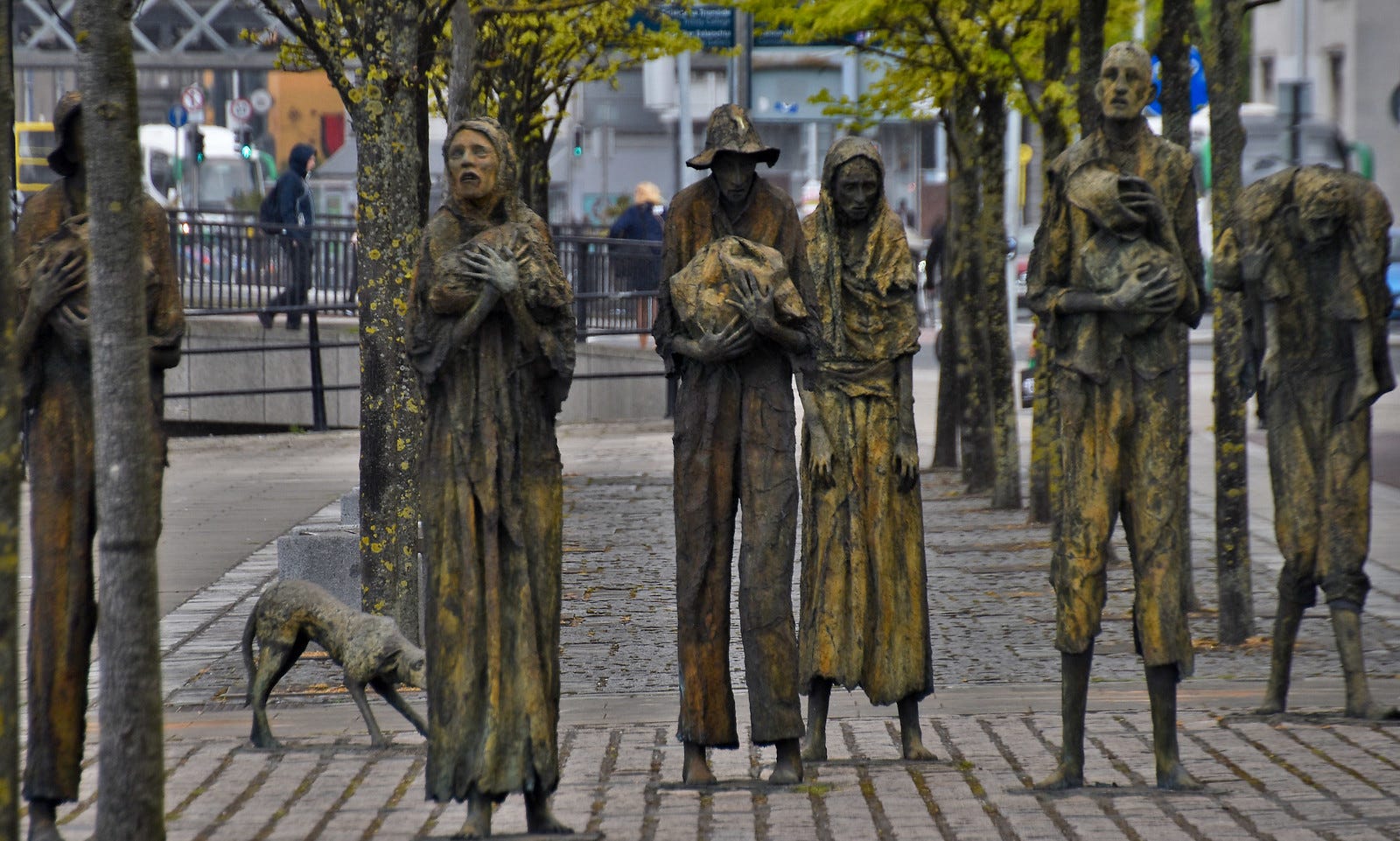
Introduced to Europe in the late 1500s and central to the continent’s agriculture ever since, the potato has long been a food both prized for its possibilities and despised for its association with poverty. Nowhere has that been more so than in Ireland, itself, just a century ago, a backwater colony of England, owned by absentee landlords whose plantations converted individual gardens and orchards into vast collective fields dedicated to producing potatoes for export. The busy British army and navy alone consumed huge quantities of them, and Irish potatoes were on sale around the world—even in countries where homegrown potatoes were readily available.
When the so-called Potato Famine hit Ireland in the mid-1840s, it spread as quickly and devastatingly as it did because so many Irish farms grew that single crop. A fungus, Phytophthora infestans, proved the danger in that reliance on potatoes alone. Disaster struck in the form of a potato-killing blight that in turn meant the deaths of hungry people, and within a few years some 3 million Irish men, women, and children—more than a third of the population—died or became refugees.
The political and economic dimensions of the Famine have been well explored in the time since. Less well known is the climatic history that allowed what is known as late blight to develop and spread so thoroughly to ravage so much territory.
Some scientists have conjectured that the blight spread by means of bat guano imported from the Pacific islands off the west coast of South America, tropical, humid places that are just right for the formation of fungi. Imported guano was widely used in Europe before the development of chemical fertilizers half a century after the Famine, particularly in France and Belgium, where the first evidence of the blight was recorded in June 1845. It had also been recorded across the ocean in the United States two years earlier, and it is possible that infected potato stock introduced from America to Europe, and not the guano itself, was the cause of the disease.
Whatever the case, in cool Europe, Phytophthora infestans lay dormant, lacking the conditions that allowed it to flourish as in its tropical homeland. But the year 1845 across much of the Northern Hemisphere was warmer and wetter than years past. In that bald fact lies the climatic twist in the tale of the Famine.