Names, Gates, Games, Walls
December 2025

It’s December, a time of collecting thoughts, cleaning spidery corners of the office, planning for next year. It’s also time for a wee break before the insanity begins all over again come January, and so, at the close of four years of World Bookcase, this is a “greatest hits” issue, four selections from the last forty-eight numbers. Alla salute!
Naming the Man in the Moon
When you look at the moon, what do you see? If you are a native hunter out on the Siberian taiga, the figure that gazes back across the distance of a quarter-million miles is that of a bear. If you are a farmer of southern Africa, the bear becomes a rabbit. If you are a woodsman of the Amazon, the rabbit becomes an all-devouring anaconda. If you are of European descent, though, the face up there is your own, or that of some long-lost kin: the man in the moon.
How did that poor man get there? He wasn’t Greek, to trust classical mythology; after Selene, the moon goddess, fell in love with the mortal Endymion, she had to visit him at his home behind the mountains at dawn. He could have been Roman, though; according to ancient Italian folk belief, an unlucky sheep thief once working by moonlight tried to rustle a god’s flock and was imprisoned on that cold chunk of whirling rock for eternity for his troubles. In medieval Christianity, the man in the moon was Cain, the son of Adam and Eve, who slew his brother Abel. In Norse mythology, he is Mani, whose job it is to lug the moon across the sky, his thankless work often obscured by storm and cloud.
Scientists have been naming the features of the moon for several hundred years. One of the most astute students of Earth’s satellite was Johannes Kepler, the German astronomer, who along about 1600 began to map its features by means of what was then a pretty high-powered telescope. Just a little of Kepler’s nomenclature survives, but he is well remembered for many things, including an early science-fiction novel called Somnium (The Dream) that depicted the moon’s inhabitants as peaceful and wise. Shortly afterward, Galileo Galilei used a still-better telescope to study the moon’s surface even more closely, intuiting that gravity was weaker on the moon than on Earth—even if, he added, all other things being equal, two bodies of different mass will fall at the same rate of acceleration.
That was just one of many things Galileo got in trouble for saying—and did he ever get into trouble. Galileo communicated in Latin, and that is the language in which later astronomers named lunar features such as the Mare Tranquilitatis, the Sea of Tranquility, where Apollo 11 touched down in 1969. Named in the same way were the Mare Nectaris, or Sea of Nectar; the Mare Vaporum, or Sea of Steam; the Mare Frigoris, or Frozen Sea; and the Mare Orientale, or Eastern Sea, whose steep mountain walls form the leftmost edge of the Man in the Moon’s face.
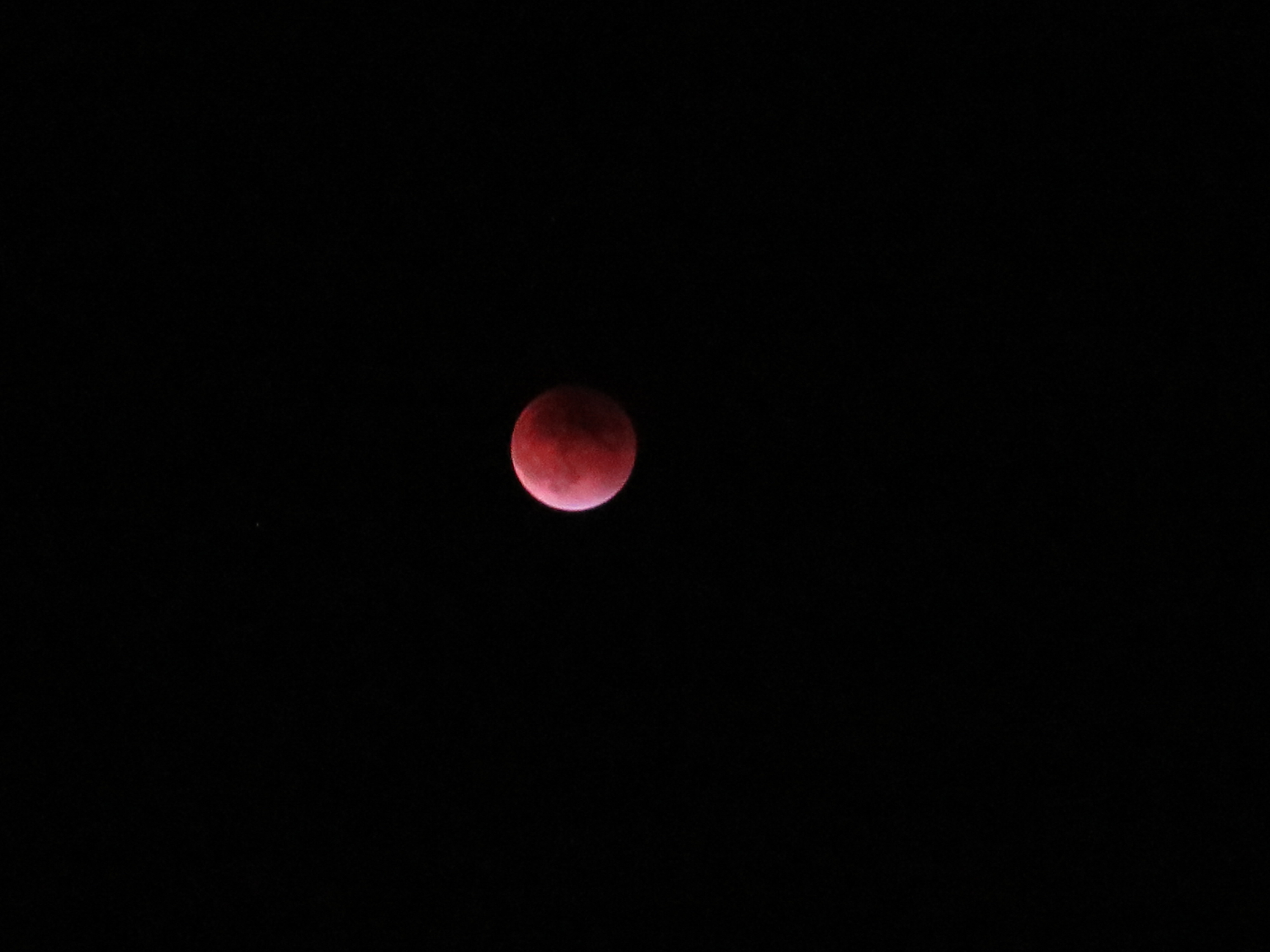
Apart from these “seas,” which are in fact lava plains, the most abundant features on the moon are craters, all of which bear the names of people. The oldest so honored is Julius Caesar, who reformed the calendar along lines we still generally follow today. Later explorer Christopher Columbus gets a crater, as does Charles Lindbergh, who soloed in flight across the Atlantic but later tarnished his reputation by expressing admiration for Adolf Hitler’s regime. Ferdinand Magellan appears, as does the ever-curious Roman naturalist Pliny—but the critical student of history will note that there are many terrestrial explorers who are not so honored, even though the geographers of the moon were desperate to come up with sufficient names when hundreds of new craters were discovered on the far side of the moon during the first lunar flyby missions. Instead, they turned to the history of mathematics, which means that the slide-rule set makes an impressive showing everywhere on the face of the moon.
Thanks to a scheme developed by a near-contemporary of Galileo’s, an Italian scholar named Giovanni Riccioli, the oldest names were once to the north, and the youngest to the south. This neat system has suffered somewhat over the years, so that that the ancient Greeks, once clustered around the 75 degree north line, are now peppered across the moon’s near side. Meanwhile, the polar regions of the moon now bear names associated with earthly polar exploration, such as Roald Amundsen, Richard Byrd, and Robert Scott.
Controversial at the time of their naming are a dozen craters named in honor of astronauts and cosmonauts, whom the International Astronomical Union, the body charged with maintaining the atlas of the moon, had originally declared ineligible—perhaps because, lucky fellows, they got to set foot on the orb and made it to the history books that way. One gigantic crater, for instance, is named for the Soviet cosmonaut Yuri Gagarin, who set the Space Age in motion when he piloted Sputnik around the earth on April 12, 1961.
On the far side we find craters named for the French chemist Louis Pasteur, his Russian contemporary Dmitri Mendeleev, and the Italian physicist Guglielmo Marconi, eminently practical-minded men who contributed greatly to their fields (Mendeleev, for instance, by coming up with the periodic table of the elements). A few craters, however, have somewhat more fanciful origins. One honors the great French science-fiction writer Jules Verne, who dreamed of moon travel. Another bears the name of the Persian poet Omar Khayyam, who sang of the “Moon of my Delight who know’st no wane.” And still another commemorates the lovelorn Cyrano de Bergerac, who wins his beloved Roxane in the moonwashed night.
