More Critters
June 2026

In 1954, a young English journalist named Ronald Downing traveled to the Midlands to call on a man about whom he had heard only fleeting reports. This man, Downing had been told, was a reclusive Eastern European traveler who had had the strange good fortune to see a yeti–an “abominable snowman,” the legendary, supposedly humanoid inhabitant of the high Himalayas. The London Daily Mail, for which Downing wrote, was financing a Himalayas expedition of its own to find and photograph the yeti, and Downing was charged with obtaining a suitably colorful background story.
He got much more than that. When Downing arrived, he found in Slavomir Rawicz a cool but not unfriendly, and certainly none too forthcoming, interviewee. After some time, however, Rawicz began to talk more freely about his adventures—of which, he insisted, his Himalayan encounter with the yeti was but a small and insignificant episode. His real story lay elsewhere. As Rawicz went on to write in his unlikely but utterly absorbing memoir The Long Walk, that story is “a warning to the living,” a warning about totalitarianism, slavery, and death.
Fifteen years earlier, Rawicz, a junior officer in the Polish cavalry, had been captured by the Red Army during the German-Soviet partition of Poland. After imprisonment in Kharkov and Lubyanka, infamous strongholds of the Soviet secret police, and after a show trial, Rawicz was sent deep into the Siberian Gulag along with other captive Poles, Finns, Ukrainians, Czechs, Greeks, and even a few English, French, and American unfortunates who had been caught up in the fighting. There, outside Yakutsk, they were put to hard labor in the frozen forest. “Some of the old hands among the soldiers said we were lucky that this was not one of the worst Siberian winters,” he recalled, “but it was as cruel and bleak as any weather I ever want to experience.” Prisoners died, frozen and starved, beaten and shot, and the survivors did their best to endure.
A year later Rawicz and a handful of his comrades had had enough. They slipped away from their labor camp and made their way on foot across a tortuous path that took them from Siberia to the Gobi, over the Taklamakan and the Himalayas, thousands of miles south to British India. “The wearing trek went on day after day,” Rawicz recounts of one stretch of the trek, through the Gobi onto the high steppes of Tibet. “Our diet was still confined to an occasional snake—we lived on them altogether for upwards of three weeks from the time of our first sampling back in the desert. The nights set in with a chill which produced a frosty white rime on the stones of the upper hillsides. In vain we looked for signs of animal life, but there were birds: from time to time a pair of hovering hawks, some gossiping magpies and our old acquaintances the ravens.”
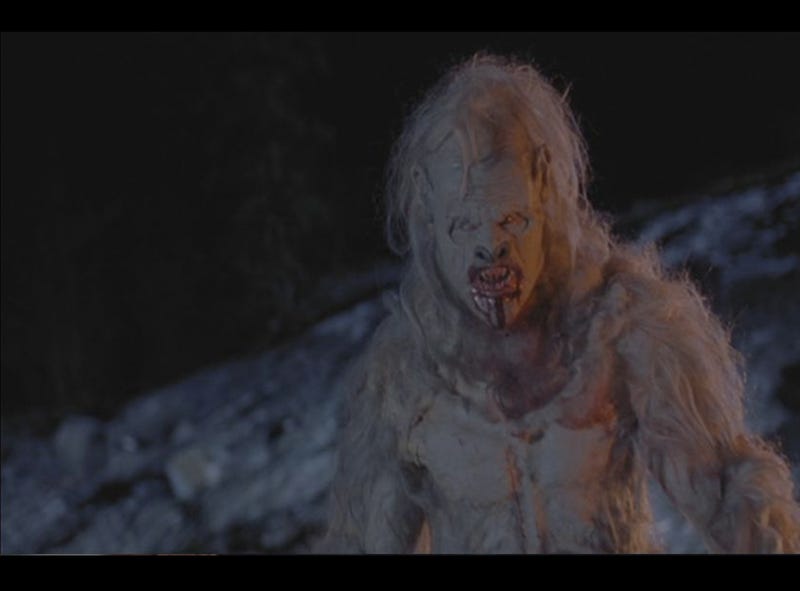
Rawicz survived, as did the other members of his party. Along the way, high up in the mountains, he saw yeti, a swarm of them. “They were enormous and they walked on their hind legs,” he avers in his memoir, their stride so long that he could not hope to keep up with them. He later rejoined the Polish army and fought against Germany at the very end of World War II, only to see his homeland swallowed by the Soviet empire.